
On this page
Road construction projects demand precision, efficiency, and long-term performance. For developers and engineering firms managing infrastructure projects, the preliminary work often determines the success of the final outcome. Asphalt milling (also known as cold planing or road profiling) sits at the foundation of successful road rehabilitation and construction projects.
This process removes the deteriorated surface layer of existing pavement using specialised equipment, creating an optimal base for new asphalt overlay. The result is a structurally sound, cost-effective, and sustainable pavement solution that extends service life whilst maintaining critical road geometry.
Structural Integrity and Proper Base Preparation
The primary function of asphalt milling in road construction is to remove damaged or deteriorated surface material while preserving the underlying base structure.
Traditional methods of simply overlaying new asphalt on top of existing pavement create compounding problems. Each additional layer increases road height, disrupts drainage systems, and fails to address underlying structural defects.
Milling allows contractors to remove the compromised surface layer to a specified depth without disturbing the sub-base, ensuring that cracks, rutting, ravelling, and other surface distress points are eliminated before new material is applied. This targeted removal approach means the structural foundation remains intact, reducing both the project timescale and cost while delivering superior bonding between the old and new asphalt layers.
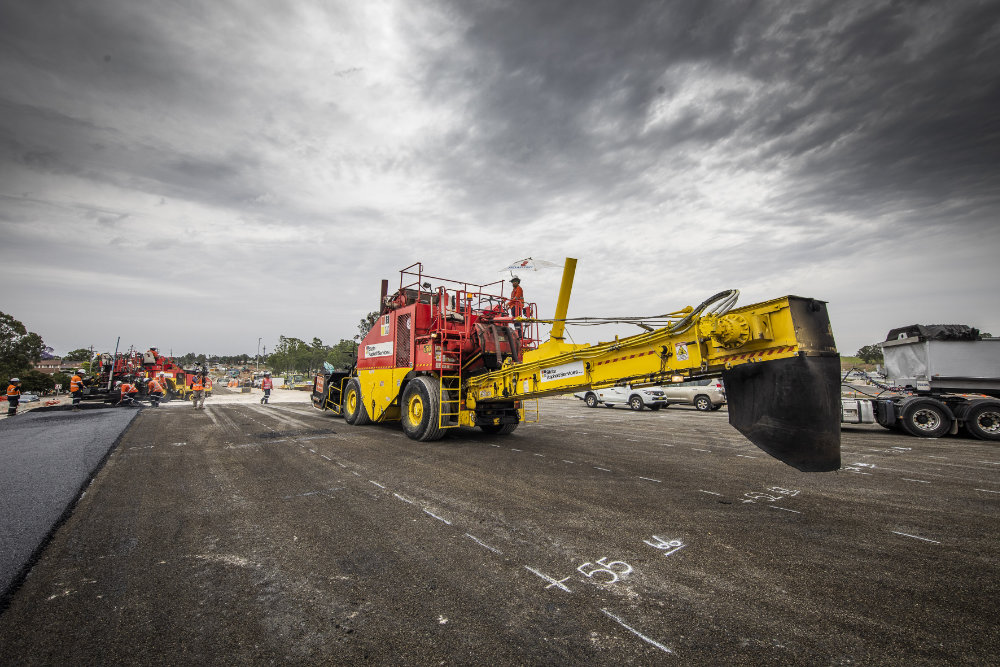
Modern asphalt milling company equipment achieves remarkable precision. Advanced milling machines now incorporate automatic depth control, utilising lasers and sensors, to maintain milled surfaces within ±5mm of the target height, ensuring consistent depth across entire project areas. This level of accuracy is crucial for projects requiring exact specifications, particularly on major arterial roads and highways, where surface uniformity directly impacts traffic safety and pavement longevity.
Height Control and Drainage Management
One of the most critical yet often overlooked benefits of asphalt milling is its capacity to control pavement height and maintain proper drainage systems. Each time asphalt is overlaid without removing the existing surface, the road height increases incrementally. Over multiple resurfacing cycles, this elevation gain creates significant complications.
Height increases affect curb reveals, manhole and catch basin clearances, shoulder and guardrail heights, and overhead clearances under bridges. For urban Sydney projects, these constraints are particularly relevant given the density of existing infrastructure and utility services. Milling prevents these cascading issues by removing old material before applying new layers, maintaining the original design elevation.
Milling also enables precise grade adjustments and cross-slope corrections. The process can modify the slope or camber of roads to facilitate proper drainage, addressing water pooling issues that accelerate pavement deterioration. For asphalt paving contractors managing complex drainage requirements, this capability is indispensable. Proper water management through accurate milling translates directly to extending pavement life and reducing long-term maintenance costs.
Material Recycling and Environmental Benefits
The material removed during the milling process — known as Reclaimed Asphalt Pavement (RAP) — is one of the most recyclable materials in infrastructure construction and one of the best sustainable road materials, and Australia is increasingly treating it as such. Approximately half of all RAP generated in Australia is reused in asphalt applications, with the remainder incorporated into cold recycling, road base and subbase construction. Transport for NSW has formalised this ambition with a stated target of 100% beneficial re-use of RAP, requiring every effort to be made to reuse material on- or off-site before any disposal is considered.
The case for doing so is compelling. Australia quarries around 200 million tonnes of sand, rock and gravel every year — roughly eight tonnes per person. Every tonne of RAP reused in a new mix reduces demand on that virgin resource, conserves natural aggregates, and lowers the carbon footprint of road construction. In 2019, the City of Adelaide and contractor Downer demonstrated what’s possible, resurfacing Chatham Street with a mix of nearly 100% RAP and recycled vegetable oil — a project that met government standards and has since informed how the industry approaches high-RAP designs.
The processing requirements for RAP are considerably less energy-intensive than producing new asphalt from raw materials. This efficiency translates to cost savings that benefit project budgets whilst supporting broader environmental objectives – an increasingly important consideration for government tenders and infrastructure projects with sustainability mandates.
Cost Efficiency and Project Timeline Benefits
Budget constraints are a reality for most infrastructure projects. Asphalt milling delivers measurable cost advantages across multiple dimensions.
- Selective removal of only the deteriorated surface layer minimises material, labour, and equipment costs compared to full-depth pavement replacement. The sub-base structure remains undisturbed, eliminating the need for extensive excavation, disposal, and reconstruction of base layers.
- The speed of milling operations reduces project timelines. The process can be performed lane by lane, allowing continuous access to roadways during milling operations. This sequencing capability is particularly valuable in high-traffic urban areas where complete road closures would cause significant disruption. Traffic can be maintained on milled surfaces whilst adjacent lanes are being processed and repaved, reducing the economic impact of road works on surrounding businesses and residents.
- The availability of locally sourced RAP reduces material transport costs. For Sydney-based projects, this local supply chain advantage contributes to overall project economics whilst supporting circular economy principles.
Surface Defect Correction and Safety Improvements
Beyond structural and economic benefits, milling directly addresses surface defects that compromise road safety and user experience. The process removes ravelling (aggregate separation), bleeding (asphalt binder surfacing), rutting (wheel path depressions), and general ride quality issues.
By eliminating these surface irregularities, milling creates a uniform, textured surface that enhances skid resistance and reduces the risk of hydroplaning. The fresh, milled surface provides optimal conditions for new asphalt overlay to bond properly, ensuring long-term pavement performance.
For understanding road profiling in the context of broader pavement management strategies, milling serves as the critical first step that determines the success of subsequent construction phases.
Application Across Project Types
The versatility of asphalt milling makes it applicable to a wide range of project scales and types. Major highway rehabilitation projects rely on full-depth milling to remove entire asphalt surfaces for reconstruction. Urban road resurfacing projects utilise standard milling to correct surface defects while maintaining the existing infrastructure. Micro-milling (which removes only a thin surface layer) is deployed for preventive maintenance and surface texture restoration.
This flexibility enables engineering firms to select the most suitable milling approach based on project requirements, existing pavement conditions, and budget parameters. Whether managing a minor carpark resurfacing or a major arterial road reconstruction, milling provides a scalable, adaptable solution.
A Strategic Solution
For developers and engineering firms managing road construction projects, asphalt milling is a strategic process that determines long-term pavement performance, project economics, and environmental outcomes.
The combination of structural integrity preservation, precise height and drainage control, material recycling capabilities, cost efficiency, and safety improvements makes milling an indispensable component of modern road construction methodology. As infrastructure demands increase and sustainability requirements tighten, asphalt services that incorporate comprehensive milling capabilities will continue to deliver superior project outcomes.
Talk to the Kypreos Group team about asphalt paving, spray seal, road profiling and asphalt testing across Greater Sydney.


