
On this page
Not all pavement is built the same. A shopping centre car park and a busy freight depot might both be covered in asphalt, but they are doing very different jobs. One needs to look good and handle a steady flow of passenger vehicles. The other needs to survive daily pressure from heavy machinery, loaded trucks, and years of intense wear.
That’s why the design behind each one is completely different. Industrial and commercial paving needs to vary in material, structure, thickness, and engineering, and choosing the wrong one for your project can be a costly mistake.
What is Commercial Paving?
Commercial paving covers surfaces designed for everyday business use. This means retail car parks, office building driveways, shopping centres, schools, and hospitality venues. These areas see regular foot and vehicle traffic, but the loads are generally lighter (passenger vehicles, light delivery vans, and the occasional small truck).
The focus with commercial asphalt is on appearance, functionality, and cost-efficiency. A well-laid commercial surface needs to look good, drain properly, resist surface cracking, and hold up to moderate traffic, all without blowing the budget. Working with experienced commercial asphalt contractors like The Kypreos Group makes a real difference here, as the right mix design and finish can significantly extend pavement life.
What is Industrial Paving?
Industrial paving is a different beast. These surfaces are built for environments where heavy machinery, loaded trucks, forklifts, and high volumes of freight movement are part of the daily operation. Ports, warehouses, freight depots, manufacturing facilities, and mining sites all fall into this category.
The engineering behind industrial asphalt has to account for extreme loads, repetitive stress in the same wheel paths, chemical exposure, and, in some cases, very high or very low operating temperatures. Getting this wrong is expensive and creates serious safety risks.
Asphalt paving services for industrial applications require a deeper level of technical planning, tough materials, and stricter quality standards from start to finish.
Key Design Differences
The differences between commercial and industrial asphalt come down to a few core design factors.
Load-Bearing Capacity
This is the big one. Commercial pavements are typically designed around light to medium vehicle loads. Industrial surfaces, on the other hand, need to handle axle loads that can be ten times or more heavier. The pavement structure, including the base, sub-base, and asphalt layers, is engineered from the ground up to distribute those loads without deforming.
Pavement Thickness
Thickness follows load. A standard commercial car park might use a 40–60mm asphalt layer over a prepared base. Industrial pavements can require multiple asphalt layers totalling 150mm or more, depending on the loads and soil conditions beneath.
Mix Design and Materials
The asphalt production process for industrial paving often involves denser, more robust mixes, sometimes incorporating modified binders or crumb rubber to improve flexibility and resistance to rutting. Commercial mixes prioritise surface finish and cost-effectiveness, while industrial mixes put structural performance first.
Sub-Base and Drainage
Industrial sites often sit on ground that’s subject to heavy compaction and moisture stress. The sub-base design for these projects is typically more engineered, with careful attention to drainage, soil stabilisation, and load distribution layers that simply aren’t required for a standard commercial car park.
Surface Treatments
Commercial surfaces often receive attention to aesthetics, line marking, smooth finishes, and careful grading for pedestrian safety. Industrial surfaces may use coarser aggregates for additional grip, or specific surface treatments to handle fuel, oil, or chemical exposure.
Does the Application Process Differ?
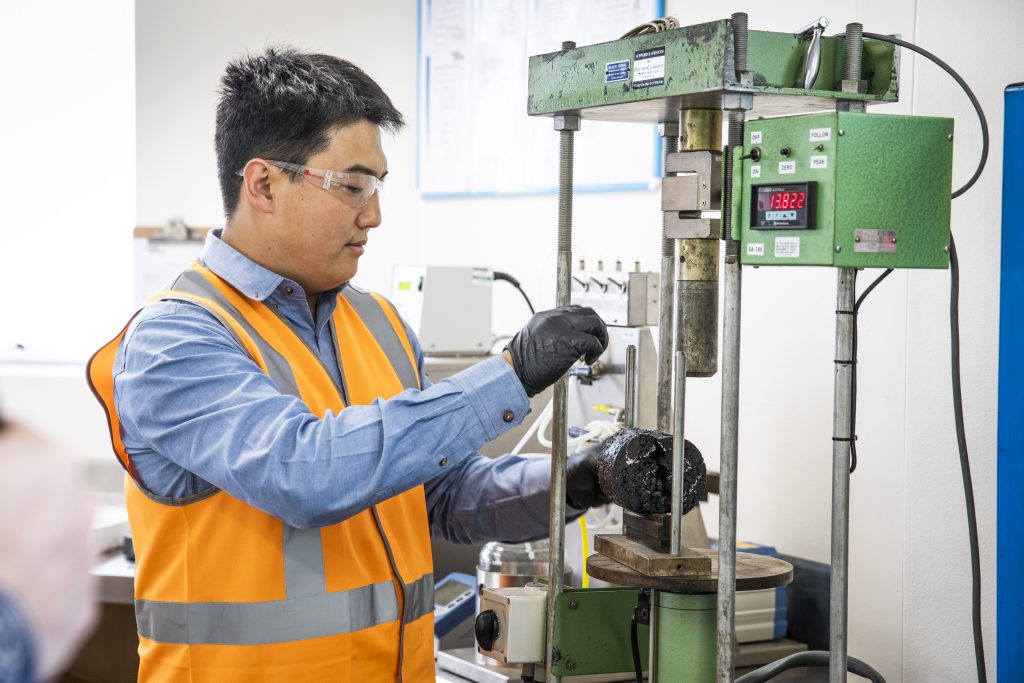
Yes, and significantly. The step-by-step asphalt paving process for an industrial site involves a much more detailed design phase. Engineers need to assess soil conditions, expected traffic loads, drainage requirements, and environmental factors before a single tonne of asphalt is laid.
For commercial projects, the process is more streamlined, but it still requires proper base preparation, correct mix selection, and careful compaction to ensure the finished surface performs well over time.
In both cases, quality workmanship during installation is what separates a surface that lasts from one that fails prematurely.
How Does Paving Type Affect Cost?
Industrial paving generally costs more per square metre than commercial paving. But cost isn’t just about the upfront price, it’s about the total value over the life of the surface.
The factors that influence asphalt cost include pavement thickness, mix design, site preparation requirements, project size, and location. For industrial projects, the higher upfront investment in a properly engineered surface pays for itself many times over in reduced maintenance, fewer repairs, and longer service life.
Cutting corners on an industrial pavement to save money at the start is one of the most expensive decisions a site manager can make.
Choosing the Right Paving Solution for Your Project
The right paving solution depends on a clear understanding of your site. Key questions to ask include:
- What loads will the surface be carrying, and how often?
- What type of traffic will be using the area?
- Are there any chemical, environmental, or temperature-related challenges?
- What’s the expected lifespan, and what’s the maintenance plan?
Answering these questions honestly will point you toward the right design, the right materials, and an expert contracting team.
Paving the Right Way with The Kypreos Group
At The Kypreos Group, we’ve spent over 50 years designing and delivering asphalt solutions for both commercial and industrial applications across Australia. From retail car parks to heavy-duty freight facilities, our team brings the technical expertise and hands-on experience to get every project right, from the base up.
We work closely with government agencies, private sector clients, and infrastructure partners to deliver surfaces that are built to last, designed for purpose, and backed by industry-leading quality standards.
If you’re planning a paving project, start with the right design with The Kypreos Group. We’ll help you build something that holds up, whatever you throw at it.
Talk to the Kypreos Group team about asphalt paving, spray seal, road profiling and asphalt testing across Greater Sydney.


