On this page
Asphalt pavements in Sydney face unique challenges: heavy traffic loads, temperature fluctuations, and moisture exposure that accelerate deterioration. For developers and construction firms managing commercial projects, the difference between a 15-year pavement and a 30-year pavement comes down to three factors: quality installation, systematic maintenance, and early intervention.
The cost of premature pavement failure extends beyond replacement expenses. Project delays, safety liabilities, and disrupted operations compound the financial impact. This guide examines proven strategies to maximise asphalt longevity based on Australian standards and industry best practices.
Key Insights
- Proper base preparation is the single most critical factor affecting pavement lifespan
- Preventative maintenance every 3-5 years can extend service life by 10-15 years
- Early crack intervention prevents water intrusion and structural failure
- Adequate drainage design eliminates 70% of premature pavement distress
- Professional installation following Austroads guidelines ensures structural integrity from day one
1. Begin with Structural Integrity
The foundation determines everything. Well-constructed asphalt pavements with proper base preparation can serve for dozens of years under moderate traffic conditions. On the other hand, inadequate base support leads to premature failure regardless of surface maintenance efforts.
Base layer specifications must account for soil conditions, anticipated loads, and drainage requirements. For Sydney projects, the NSW Roads and Maritime Supplement to Austroads Guide to Pavement Technology provides region-specific structural design parameters. The base must achieve proper compaction – typically 95% modified maximum dry density – to prevent settlement and maintain load distribution.
Asphalt thickness and mix design matter equally. Dense-graded asphalt provides the best durability for most commercial applications, while open-graded mixes suit specific drainage requirements. The binder content and aggregate quality directly influence resistance to deformation and oxidation.
2. Implement Preventative Maintenance Cycles
Austroads research into pavement deterioration modelling consistently demonstrates that pavements decline slowly in their early years before entering a phase of rapid deterioration — making the case for scheduled preventative maintenance clear. As Austroads notes, choosing inappropriate treatments or poor timing can significantly increase long-term costs and reduce the level of service delivered to the community.
Surface treatments applied at 3-5 year intervals protect the pavement structure and delay oxidation. Seal coating creates a barrier against water penetration, UV damage, and chemical exposure. The Australian Flexible Pavement Association recommends these intervals based on traffic volume and environmental exposure.
For commercial pavements experiencing moderate to heavy traffic, consider these maintenance windows:
- Years 0-5: Initial curing, minimal intervention required
- Years 5-7: First surface treatment or seal coat
- Years 7-15: Crack sealing, second surface treatment, minor patching
- Years 15-25: Major rehabilitation, overlay consideration, or asphalt profiling to restore surface integrity
Scheduled maintenance costs roughly 1/10th the expense of major rehabilitation. The return on investment becomes clear when comparing systematic preventative treatment against reactive emergency repairs.
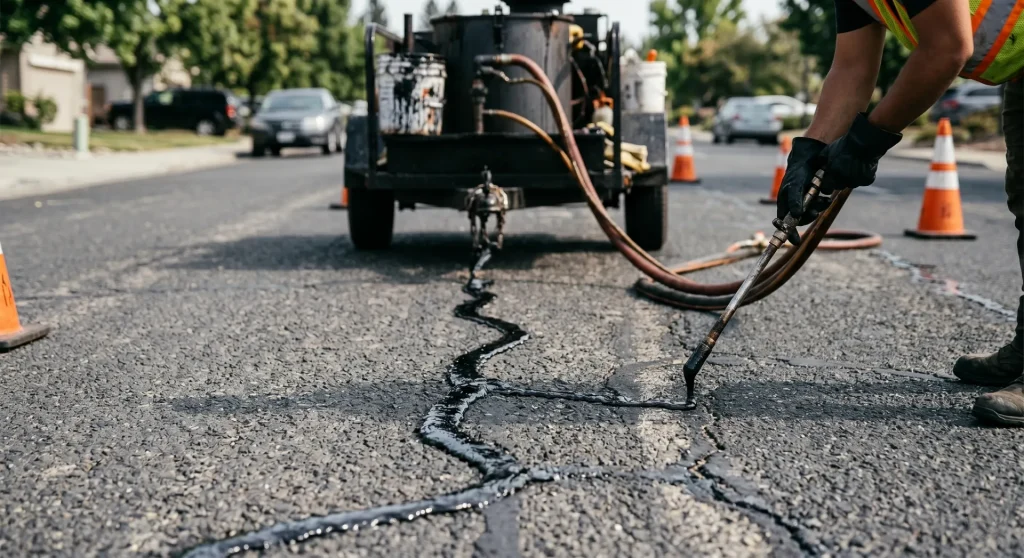
3. Address Cracks Immediately
Cracking initiates the failure sequence. Small surface cracks permit water infiltration into the base layer, where freeze-thaw cycles (relevant for elevated Sydney locations and regional projects) accelerate structural deterioration. What begins as hairline cracking evolves into alligator cracking, then potholing, within 2-3 years without intervention.
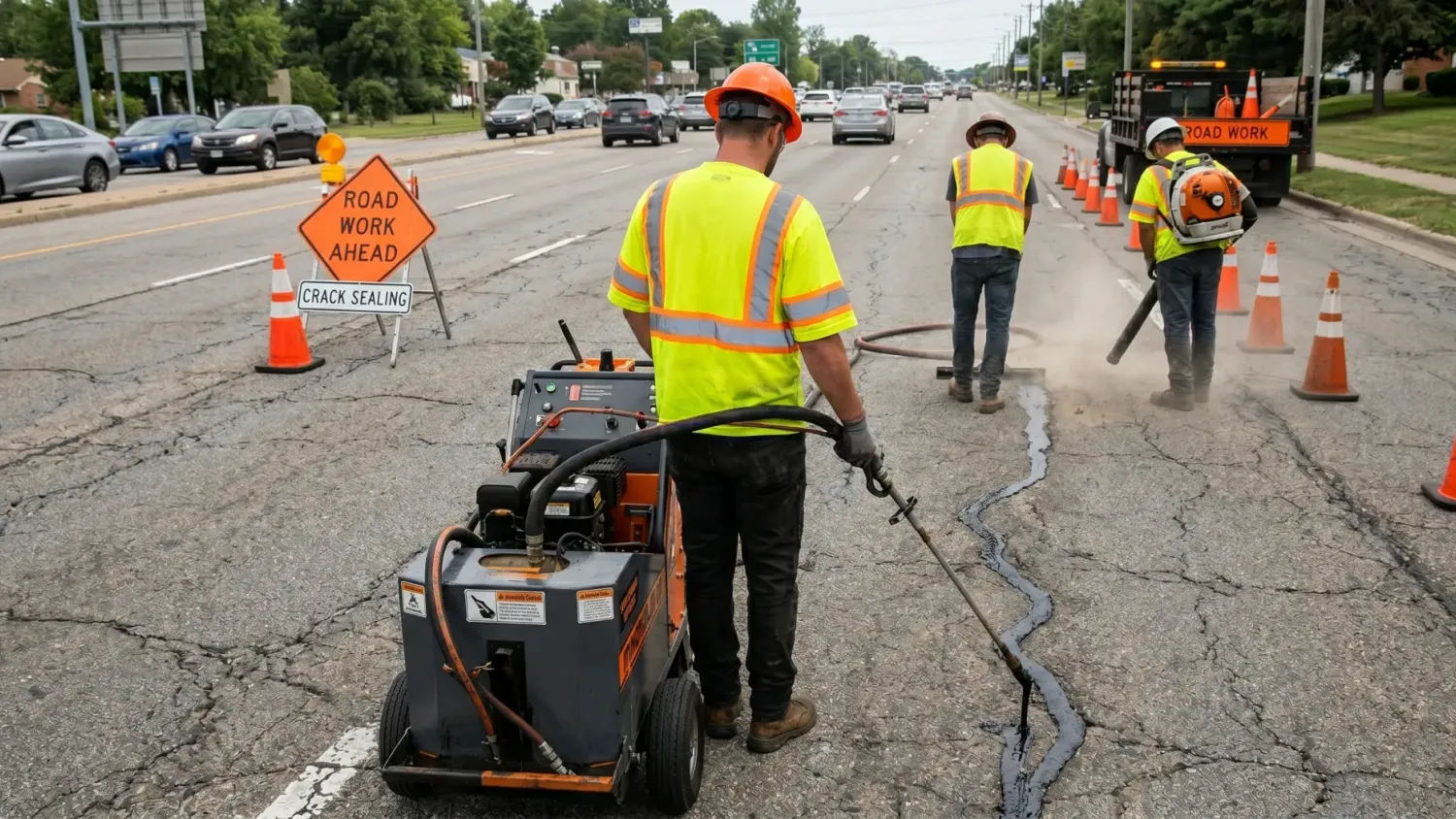
Crack sealing must occur while cracks remain narrow – typically under 6mm. Clean and seal procedures remove debris, ensuring proper adhesive bonding. For wider cracks exceeding 6mm, rout and seal methods provide better long-term performance by creating a reservoir for sealant material.
Common asphalt pavement issues manifest predictably. Longitudinal cracking along joints indicates poor compaction during initial construction. Transverse cracking reflects thermal stress or underlying base movement. Block cracking signals oxidation and aged binder requiring surface renewal.
Professional assessment identifies whether cracks stem from surface distress or structural deficiency. Surface-level cracking responds to maintenance treatments, while structural cracks demand more comprehensive intervention.
4. Design for Water Management
Water causes more pavement damage than traffic. Proper drainage design eliminates standing water and prevents subsurface infiltration – the primary causes of base failure and premature deterioration.
Surface drainage requires adequate cross-slope (minimum 2% grade) to direct water off the pavement surface. Ponding water accelerates oxidation, weakens the asphalt binder, and creates safety hazards. For parking areas and low-traffic zones, strategically positioned drainage inlets prevent water accumulation.
Subsurface drainage matters equally. Edge drains along pavement perimeters evacuate water from the base layer before it undermines structural integrity. On projects with poor soil drainage, consider aggregate base specifications with higher permeability to facilitate water movement away from the pavement structure.
The Austroads Guide to Pavement Technology emphasises drainage as fundamental to extending pavement life. Sydney’s rainfall patterns demand particular attention to drainage design during construction planning.
5. Keep Emergency Solutions Available
Even well-maintained pavements require occasional emergency repairs. Equipment strikes, utility excavations, and unexpected subsurface failures pose immediate safety hazards that require a rapid response.
Cold mix asphalt suppliers provide temporary patching solutions for emergency situations. Cold mix offers workability in various weather conditions and immediate trafficability, making it suitable for urgent repairs until permanent hot mix patching can be scheduled.
For permanent repairs, full-depth patching removes deteriorated material from the base layer, addresses any underlying issues, and restores structural integrity with proper hot-mix asphalt. Partial depth patches (common but often inadequate) frequently fail within 6-12 months due to insufficient bonding or continued base deterioration.
6. Calculate Whole-of-Life Value
Initial construction costs represent only 20-30% of total pavement lifecycle expenses. Maintenance, rehabilitation, and eventual replacement comprise the majority of long-term costs. Developers and asset managers should evaluate pavement decisions through a 20-30 year economic lens rather than focusing solely on initial installation pricing.
Quality materials and proper installation techniques increase upfront costs by 10-15% but can double effective service life. A pavement designed for 20 years of service with minimal maintenance delivers better return on investment than a budget installation requiring major rehabilitation at year 10.
The Australian Flexible Pavement Association’s guidelines on pavement lifecycle costing provide frameworks for comparing initial investment against projected maintenance expenditure and replacement timing.
7. Work with Specialists
Asphalt longevity depends on expertise at every stage: geotechnical assessment, structural design, mix specification, installation technique, and ongoing maintenance. An asphalt maintenance expert brings specialised knowledge of Australian conditions, material specifications, and proven techniques that extend service life.
For Sydney projects, partnering with contractors experienced in local soil conditions, climate factors, and regulatory requirements helps reduce risk and improve outcomes. Proper installation establishes the foundation for decades of service, while systematic maintenance preserves that investment.
Expert Guidance for Your Next Sydney Project
Kypreos Group specialises in commercial asphalt solutions, from initial installation through comprehensive maintenance programs. Our team applies best-practice techniques and Australian standards to deliver pavements that perform reliably for 25+ years. Contact us to discuss your project requirements and develop a lifecycle management strategy.
Talk to the Kypreos Group team about asphalt paving, spray seal, road profiling and asphalt testing across Greater Sydney.


